A 52-Week Bible Study Plan That Won't Make You Quit by February
Most year-long Bible study plans fail by week 6. Here's a realistic 52-week approach that actually works ... from a mom who finally made it past March.
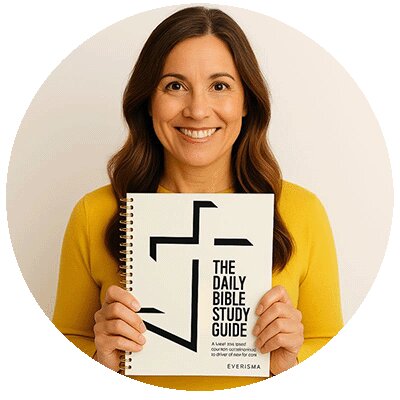
Written by Kristen
Coffee-loving mom of 2 · Bible study enthusiast · Founder of Bible Momma

Why Most 52-Week Bible Study Plans Fail
Let me paint you a picture. It’s January 1st. You’re fired up. New year, new you. You download a Bible-in-a-year plan, buy a fresh journal, and commit to reading every single day.
January goes great. You’re in Genesis. Creation! The flood! Joseph’s coat! This is exciting.
February is fine. Exodus has some cool stuff. The Red Sea! The Ten Commandments!
March hits. You’re in Leviticus. You’re reading about animal sacrifices and skin diseases and priestly garments and you’re thinking, “What am I doing with my life?” You skip a day. Then three days. Then a week. Then you feel so behind that catching up feels impossible, so you just… stop.
If this is your story, congratulations … you’re in the majority. Most Bible-in-a-year plans have a dropout rate that would make a gym membership jealous.
But here’s the thing: the problem isn’t you. The problem is the plan.
What’s Wrong with Most Year-Long Plans
Most 52-week plans are really just “read the entire Bible from cover to cover in 365 days” plans. And that approach has some serious issues:
The pacing is brutal. Reading the whole Bible in a year requires about 3-4 chapters per day. That’s doable when you’re in the Gospels, but soul-crushing when you’re in Numbers.
There’s no study built in. Reading isn’t the same as studying. You can read three chapters and retain absolutely nothing. I’ve done it. Many times. Usually while also mentally planning dinner.
It doesn’t account for real life. Miss a few days and suddenly you’re 12 chapters behind. The guilt spiral begins. You try to cram, it feels like a chore, and the joy evaporates.
Some parts of the Bible are harder than others. Reading through the prophets requires way more context than reading through the Gospels. A one-size-fits-all pace doesn’t acknowledge this at all.

A Better Approach to 52 Weeks
Here’s what I’ve learned after multiple failed attempts: the best 52-week plan isn’t about covering the most ground. It’s about covering ground you actually remember.
A plan that works looks more like this:
Study, Don’t Just Read
Instead of blasting through three chapters a day, spend your time actually studying one passage. Use a method like SOAP or inductive study on a focused section. You’ll cover less territory but gain infinitely more understanding.
Over 52 weeks, even studying just one passage per day, you’ll work through a huge amount of Scripture … and you’ll actually know what it says.
Build in Catch-Up Weeks
A good plan has buffer built in. Maybe you study five days a week and leave weekends free. Or maybe every fourth week is a review week where you revisit what you’ve been studying. Either way, you need margin. Life with kids (or just life in general) is unpredictable, and a plan without grace is a plan you’ll quit.
Mix It Up
Don’t go straight from Genesis to Revelation. A plan that alternates between Old Testament and New Testament keeps things fresh. Maybe one week you’re in the Psalms, the next week you’re in the Gospel of Mark, then you jump to a prophet. Variety prevents the burnout that happens when you’re stuck in the same genre for months.
Focus on Books, Not the Whole Bible
Here’s a hot take: you don’t have to read the entire Bible in one year. I know, scandalous. But studying 15-20 books deeply over a year will give you a stronger biblical foundation than speed-reading all 66 books and retaining nothing.
A practical 52-week plan might look like:
- Weeks 1-4: Gospel of John (foundation of who Jesus is)
- Weeks 5-8: Genesis 1-25 (creation, Abraham, foundations)
- Weeks 9-12: Psalms selections (worship, lament, praise)
- Weeks 13-16: Romans (theology that applies to daily life)
- Weeks 17-20: Exodus (God’s rescue and faithfulness)
- Weeks 21-24: Proverbs (practical wisdom … this one is gold for parents)
- Weeks 25-28: Acts (the early church … it reads like an adventure story)
- Weeks 29-32: Isaiah selections (prophecy with context)
- Weeks 33-36: James (practical, punchy, and short)
- Weeks 37-40: 1 & 2 Samuel (David’s story … drama, failure, faith)
- Weeks 41-44: Philippians, Colossians, Ephesians (Paul’s letters)
- Weeks 45-48: Ruth, Esther, Jonah (narrative books that are easy to study)
- Weeks 49-52: Review and revisit favorites
That’s a year of solid study without the Leviticus meltdown.

How to Actually Stick With It
The plan itself is only half the battle. Here’s what keeps me going week after week:
Keep sessions short. 15-20 minutes is my sweet spot. Anything longer and it starts competing with sleep, and sleep always wins.
Same time, same place. Habit stacking is real. I do my study right after I pour my second cup of coffee (yes, second … the first one is survival, the second one is sanctification). Same spot on the couch, same Bible, same journal. My brain knows what’s happening before I even open the book.
Tell someone. Not in a weird accountability partner way (unless that’s your thing). Just mention to a friend or your spouse that you’re doing this. Having even one person who occasionally asks “how’s the study going?” makes a surprising difference.
Don’t punish yourself for missing days. This is the biggest one. When you miss a day … or a week, or a month … just pick up where you left off. Don’t try to catch up. Don’t go back to the beginning. Don’t feel guilty. Just open your Bible and start again. The goal isn’t perfection. It’s presence.
Use a guide with structure. I am deeply, personally convinced that the number one reason people quit year-long study plans is decision fatigue. “What do I read? What do I study? How do I start?” Every day, that mental load is there. The guide I use eliminated that entirely. It tells me what to read, gives me questions to think about, and keeps me on pace without making me feel behind. Game changer.

What If You’re Starting Mid-Year?
Good news: you don’t have to start in January. You don’t even have to start on a Monday. Start today. Wherever you are in the calendar, you can begin a 52-week plan. The Bible doesn’t care what month it is.
I actually started my current plan in March, after my previous January start crashed and burned (see: Leviticus meltdown). Starting in March meant I hit the halfway point in September, finished strong in February, and felt zero pressure to align with New Year’s resolutions.
Start when you’re ready. Not when the calendar tells you to.
The Realistic Version
Look, I’m not going to pretend I’ve been perfectly consistent for 52 straight weeks. I haven’t. There was a two-week stretch in October when everyone in my house had the flu and I didn’t open my Bible once. There was a week in December when the holidays consumed everything and my study was five minutes of Psalm 23 on Christmas morning.
But I kept coming back. And over the course of a year, those weeks of study added up to something real. I know the Bible in a way I didn’t before. I see connections between passages. I have a journal full of prayers God has answered. That doesn’t happen because you’re perfect. It happens because you don’t quit.

Frequently Asked Questions
Should I read the whole Bible in a year or just parts of it?
Either approach can work, but I'd recommend studying key books deeply over reading everything quickly. You'll get more out of truly understanding 20 books than skimming 66. If you've already studied the Bible for years and want to read through the whole thing, go for it. But for most people, depth beats breadth.
How many chapters should I read per day in a 52-week plan?
It depends on your approach. If you're reading the whole Bible, about 3-4 chapters daily. If you're doing focused study (which I recommend), you might only study 5-15 verses per day. The key metric isn't chapters covered ... it's understanding gained.
What do I do when I get to the hard parts of the Bible?
Slow down, not speed up. The hard parts ... genealogies, laws, obscure prophets ... are hard because they need context. Use a study Bible or guide that explains what you're reading and why it matters. And give yourself permission to spend two weeks on a passage that a reading plan says should take two days.
Can I do a 52-week plan with a group?
Absolutely. Having a group adds discussion, accountability, and different perspectives. You can each do the daily study independently and meet weekly to talk about what you learned. Just make sure the group's pace works for everyone ... the fastest reader shouldn't set the speed for the whole group.
Ready to Find a Bible Study That Actually Works?
This is the guide that finally helped me stay consistent, and I think it can help you too.
See the Bible Study Guide I Use →Hi, I'm Kristen!
I'm a coffee-loving mom of two from who finally found a Bible study system that actually sticks. After trying (and abandoning) more study guides than I can count, I built Bible Momma to help other moms stop feeling guilty and start growing closer to God... messy schedules, short attention spans, and all.
Read my full story →