The Best Bible Study Guide for Beginners (That Won't Overwhelm You)
Looking for a Bible study guide that won't make you feel lost? Here's what to look for and the one guide that finally worked for this busy mom.
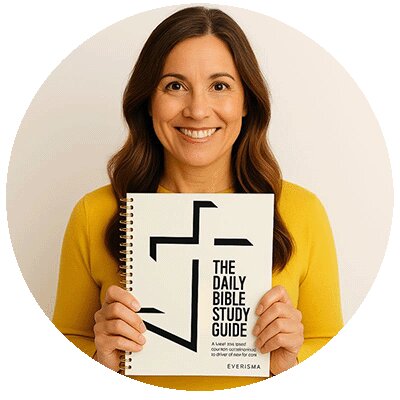
Written by Kristen
Coffee-loving mom of 2 · Bible study enthusiast · Founder of Bible Momma
What Is the Best Bible Study Guide for Beginners?
The best Bible study guide for beginners is one that meets you exactly where you are — no theology degree required, no guilt trips, and no assumption that you already know the difference between the Old and New Testament. A good beginner guide gives you structure without rigidity, depth without overwhelm, and space to go at your own pace.
I say this as someone who tried (and abandoned) more study guides than I can count before finding one that actually worked.
Why Most Bible Study Guides Feel Overwhelming
Here’s the thing nobody tells you: most Bible study guides aren’t actually designed for beginners. They say “beginner-friendly” on the cover, but then they hit you with 45 minutes of daily reading, cross-references to books you’ve never heard of, and questions that assume you already know who the Corinthians were and why Paul was writing to them.
I remember opening my first “beginner” Bible study and feeling like I’d walked into an advanced calculus class. The guide assumed I knew how to look up verses, understood biblical context, and had strong opinions about translation differences. I had none of those things. I just wanted to learn about God without feeling stupid.
If that resonates with you — you’re not alone, and you’re not the problem. The guide was.
What to Look for in a Beginner Bible Study Guide
After years of trial and error, here’s my checklist for what actually makes a Bible study guide beginner-friendly:
It explains the basics. A good guide doesn’t assume you know anything. It explains what you’re reading, who wrote it, and why it matters — in plain language.
It’s short. If a daily session takes more than 15-20 minutes, most beginners will burn out within two weeks. I know because I did. Multiple times.
It works with any Bible translation. You shouldn’t have to buy a specific Bible to use a study guide. Whether you have an NIV, ESV, NLT, or your grandmother’s King James — it should work.
It focuses on application, not just knowledge. The best guides help you connect what you’re reading to your actual life. Not just “what does this verse mean?” but “what does this mean for me today?”
It doesn’t guilt you for missing a day. Life happens. Kids get sick. You oversleep. A good guide builds in grace, not deadlines.
What Order Should I Study the Bible In?
If you’re brand new, don’t start at Genesis and try to read straight through. (Trust me — Leviticus will stop you in your tracks.) Instead, most experts recommend starting with one of these:
- The Gospel of John — the most accessible introduction to who Jesus is
- The Gospel of Mark — short, action-packed, easy to follow
- Psalms — beautiful poetry that connects with every emotion you’ve ever felt
- Proverbs — practical wisdom you can apply immediately
A good beginner study guide will actually tell you where to start and guide you through in a logical order — so you don’t have to figure this out on your own.
The Guide That Finally Worked for Me
After trying seven different Bible studies (some expensive, some free, all abandoned), I found a system that was built for women like me — busy, a little intimidated, and tired of feeling guilty.
It takes just 15 minutes a day. It works with whatever Bible I already own. It doesn’t assume I went to seminary. And when I miss a day (or a week, let’s be honest), I just pick up where I left off.
That’s it. No complicated system. No pressure. Just a simple, guided path through Scripture that finally made Bible study feel doable.
If you’re a beginner looking for something that won’t overwhelm you — this is where I’d start.
Frequently Asked Questions
Do I need a specific Bible to get started?
No! Any Bible works. If you don’t own one yet, I’d recommend the NLT (New Living Translation) for readability or the NIV (New International Version) as a solid all-around choice. But truly, use whatever you have or whatever feels comfortable to read.
How much time should a beginner spend on Bible study each day?
Start with 10-15 minutes. That’s it. Consistency matters far more than duration. You can always increase your time later once it becomes a habit, but starting small is the key to actually sticking with it.
What if I don’t understand what I’m reading?
That’s completely normal! The Bible was written thousands of years ago in a different culture. A good study guide will provide context and explanations. Don’t be afraid to google things, ask questions, or just sit with the confusion for a bit. Understanding builds over time.
Can I study the Bible on my own, or do I need a group?
You can absolutely study on your own. While groups can be wonderful for discussion and accountability, solo study is perfectly valid — and sometimes it’s the only realistic option for busy moms. The right guide will support both approaches.
Ready to Find a Bible Study That Actually Works?
This is the guide that finally helped me stay consistent, and I think it can help you too.
See the Bible Study Guide I Use →Hi, I'm Kristen!
I'm a coffee-loving mom of two from who finally found a Bible study system that actually sticks. After trying (and abandoning) more study guides than I can count, I built Bible Momma to help other moms stop feeling guilty and start growing closer to God... messy schedules, short attention spans, and all.
Read my full story →