How to Start a Bible Study Group (Even If You're Not a Leader)
Think you need to be a pastor or a born leader to start a Bible study group? Nope. Here's how this introverted mom pulled it off ... and how you can too.
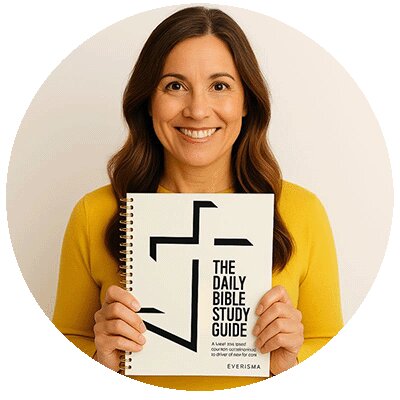
Written by Kristen
Coffee-loving mom of 2 · Bible study enthusiast · Founder of Bible Momma

You Don’t Need Permission to Start a Bible Study Group
Let me just get this out of the way: I am not a leader. I’m the person who sits in the back, drinks her coffee, and nods along. I have never once raised my hand in a group setting voluntarily. Public speaking makes me want to crawl under a table.
And yet, somehow, I started a Bible study group that’s been meeting for over a year.
If you’ve been thinking about starting one but keep telling yourself you’re not qualified, not outgoing enough, or not “biblical” enough … hi, welcome, you’re in good company. Because the bar for starting a Bible study group is way lower than you think. You don’t need a theology degree. You don’t need to be the woman who has all the answers. You just need to be the woman willing to send the first text.
Step 1: Pick Two or Three People (That’s It)
You don’t need to fill a room. You need like… three people. Maybe four. Honestly, some of the best Bible study groups I’ve heard of started with two women and a pot of coffee.
Here’s who to ask first:
- A friend you’re already comfortable with. Someone who won’t judge you for mispronouncing “Ecclesiastes.” (It’s me. I’m the one who mispronounces it.)
- Someone who’s mentioned wanting to grow spiritually. She’s already told you she’s interested … she’s just waiting for someone to invite her.
- A neighbor, coworker, or church friend you’ve been meaning to hang out with more. Bible study is just a good excuse to actually follow through.
Don’t overthink this. You’re not casting a movie. You’re inviting people to sit on your couch and talk about God.

Step 2: Pick a Time and Stick to It
The biggest killer of new Bible study groups isn’t bad curriculum or awkward silences. It’s inconsistency. Pick a time, pick a day, and make it the same every single week.
Here’s what worked for us: Thursday nights at 7:30 PM. Kids are in bed (mostly). The day is winding down. Nobody’s trying to rush off to school drop-off.
Some other options that work well:
- Early morning before the chaos. Like, 6 AM early. Bring coffee. Lots of coffee.
- During nap time. This only works if your kids nap on a similar schedule, but if they do … golden.
- Saturday morning. After the cartoons are on and the cereal is poured, sneak away for an hour.
- Virtual on a weeknight. Zoom Bible study is still Bible study. Pants optional. (Kidding. Mostly.)
The time doesn’t matter as much as the consistency. We’ve only had to reschedule twice in a year, and both times it was because of stomach bugs. Because of course it was.
Step 3: Choose Something Simple to Study
This is where most people get stuck. They think they need to create some incredible curriculum or be able to explain the book of Revelation. You do not.
Here are some easy starting points:
Start with a book of the Bible. The Gospel of John is a great first pick. It’s readable, it’s powerful, and you can go chapter by chapter without any outside materials if you want.
Use a study guide. This is honestly what saved our group. Nobody had to prepare a lesson or pretend to be an expert. We all just followed the same guide and discussed what we’d read that week. It gave us structure without making anyone feel like they had to “teach.”
Try a topical study. Pick a topic … grace, prayer, anxiety, motherhood … and find verses related to it. Talk about them. That’s it. That’s the whole thing.

Step 4: Set the Vibe (Low-Key Is the Move)
Nobody wants to show up to something that feels like a formal class. The whole point is that this is different from church. It’s intimate. It’s casual. It’s the kind of space where you can say “I have no idea what this verse means” and nobody blinks.
Here’s how I keep ours chill:
- Snacks. Always snacks. We rotate who brings them. Last week was cheese and crackers. This week was store-bought cookies because Lisa forgot until 4 PM. Nobody cared.
- No pressure to talk. Some weeks someone shares something really deep. Other weeks we mostly just laugh and eat. Both are fine.
- Start with a check-in. Before we open our Bibles, we go around and share one thing from our week. It takes five minutes and it makes everything else feel more natural.
- Keep it to an hour. Maybe 90 minutes if people are really into it. But giving it a clear end time makes it less intimidating for newcomers.
Step 5: Don’t Try to Have All the Answers
This was the hardest thing for me. I kept thinking that if I was the one who started the group, I needed to be the one who explained everything. That is absolutely not true.
Some of my favorite moments in our group have been when someone asks a question and every single one of us goes, “I have no idea.” And then we look it up together. Or we don’t, and we just sit with the question for a week.
You’re not a teacher. You’re a facilitator. And honestly, sometimes you’re just the person who remembered to send the reminder text. That’s leadership enough.
What If Nobody Wants to Join?
Real talk: this might happen. You might text five people and get three “sounds great!” responses and then two of them bail the first week. That’s okay. It happened to me.
Our group started with four people. One dropped out after a month. But then someone brought a friend, and that friend brought her sister-in-law, and now we’re at six. It grew naturally because the people who stayed genuinely liked it and told other people.
Don’t take it personally if someone isn’t interested. Not everyone is in a season for group Bible study. Some people prefer to study alone. Some people are just busy. It’s not about you.

How Our Group Actually Works (Week by Week)
In case you want a practical blueprint, here’s our setup:
- Everyone reads the week’s section on their own. We use a guide that breaks things into short daily readings, so nobody’s cramming the night before. (Okay, sometimes we’re cramming the night before. But the option is there.)
- We meet Thursday at 7:30. Check-in, snacks, settle in.
- Someone reads a passage out loud. We rotate who reads. Nobody is forced.
- We discuss. What stood out? What confused us? How does it connect to real life?
- We close with a quick prayer. Sometimes one person prays, sometimes we all just sit quietly for a minute. No rules.
The whole thing takes about an hour. My kids have interrupted exactly zero times because they’re asleep. (Okay, my four-year-old came out once for water. We gave her water. Life went on.)
The Best Part Nobody Talks About
Starting a Bible study group didn’t just help my faith. It gave me friends. Real, actual, sit-on-my-couch-and-tell-me-the-hard-stuff friends. We’ve walked through job losses, health scares, parenting meltdowns, and one really dramatic HOA dispute together.
The Bible stuff is the foundation, but the relationships are the thing that keeps everyone coming back. And that’s the part you can’t plan for … it just happens when you show up consistently and let people be real.

Frequently Asked Questions
How many people do you need to start a Bible study group?
Two. Seriously, two people is enough. Jesus literally said "where two or three are gathered in my name, there am I among them" (Matthew 18:20). So you've got divine backup. Most groups that grow started with just 2-4 people who committed to showing up consistently. Don't wait until you have a full room ... just start.
What if I don't know the Bible well enough to lead a group?
You don't have to know it well. You just have to be willing to learn alongside everyone else. A good study guide does the heavy lifting ... it provides the structure, the questions, and the context so nobody has to play teacher. Our group runs on a guide that literally tells us what to read and what to talk about. I'm learning right alongside everyone else.
How do you keep a Bible study group going long-term?
Consistency and low pressure. Meet at the same time every week. Don't make people feel guilty for missing. Keep the format simple. And honestly ... the snacks help. People come back when they feel safe, when they enjoy it, and when it fits into their life without being a burden. That's the whole secret.
Should a Bible study group be all women, or can it be mixed?
Totally your call! Our group is all women because we talk about mom stuff and marriage stuff pretty openly, and that dynamic works for us. But mixed groups are great too, especially for couples or church community groups. Just think about what kind of conversations you want to have and pick the group composition that supports that.
Ready to Find a Bible Study That Actually Works?
This is the guide that finally helped me stay consistent, and I think it can help you too.
See the Bible Study Guide I Use →Hi, I'm Kristen!
I'm a coffee-loving mom of two from who finally found a Bible study system that actually sticks. After trying (and abandoning) more study guides than I can count, I built Bible Momma to help other moms stop feeling guilty and start growing closer to God... messy schedules, short attention spans, and all.
Read my full story →